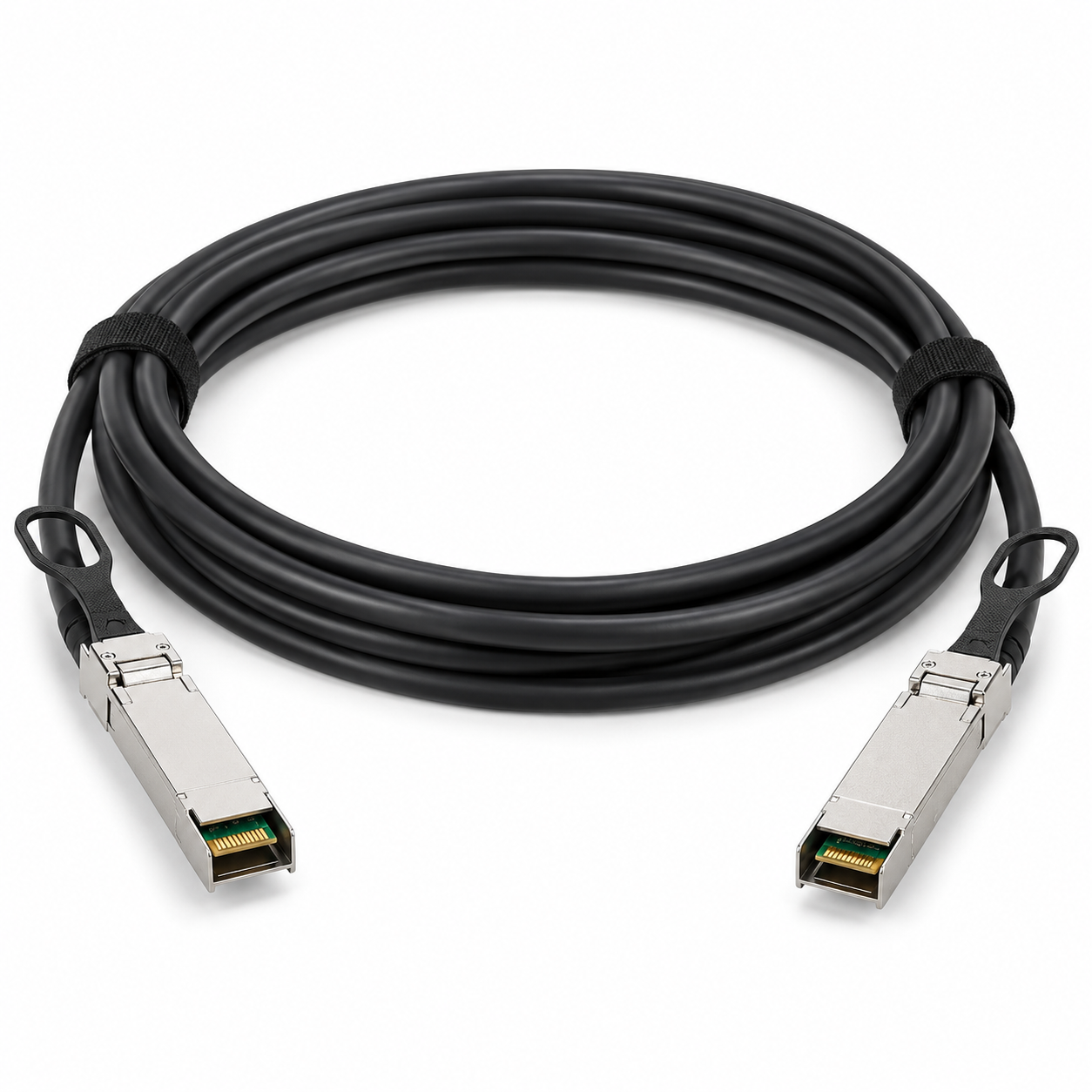




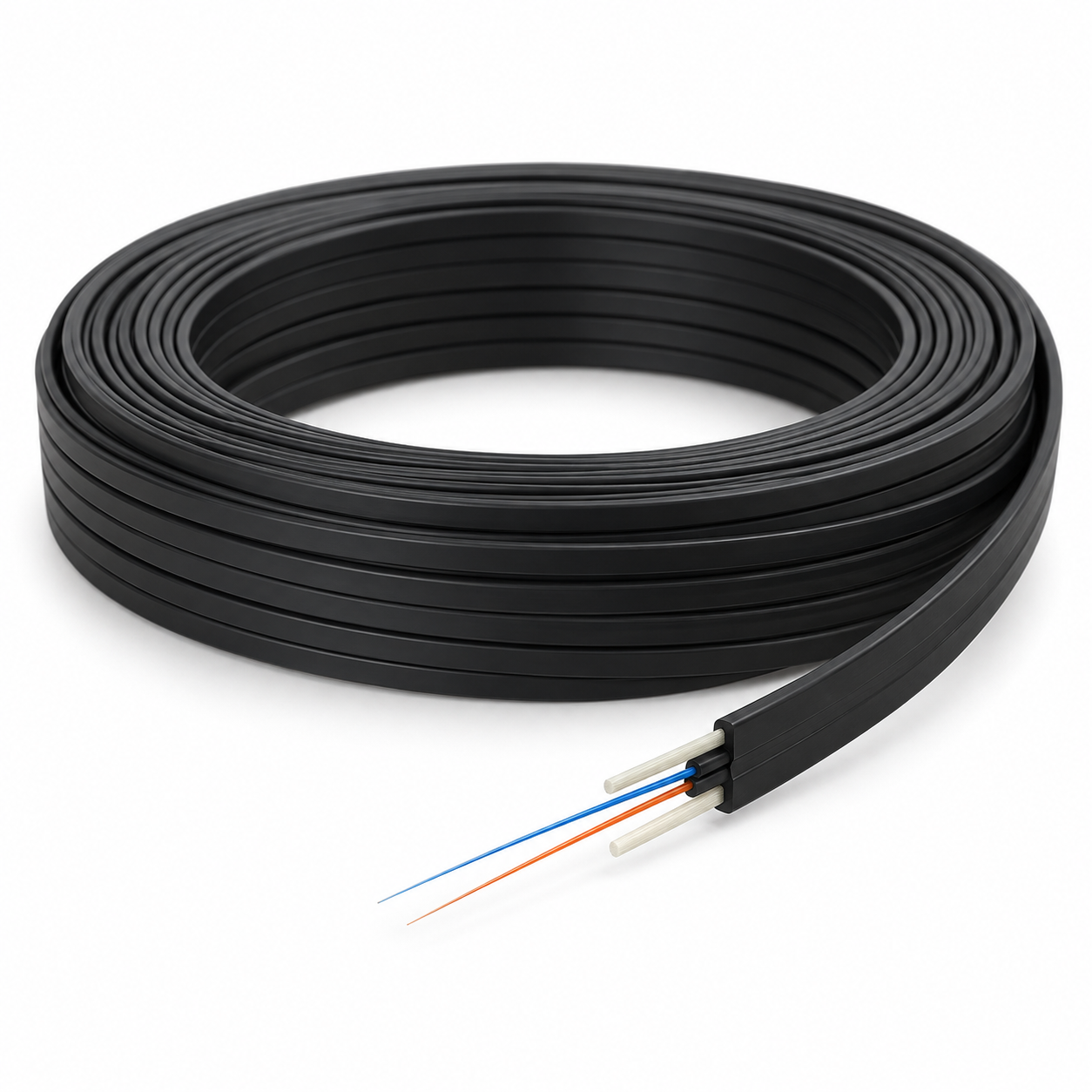
2 Core Ftth Fiber Optic Drop Cable
2 Core FTTH Fiber Optic Drop Cable The 2 Core FTTH Fiber Optic Drop Cable is a compact fibre cable designed primarily for FTTH and other FTTx subscriber connections. It is commonly used to carry optical fibre from a distribution...
Delivery: Nairobi same-day to 1 day; nationwide 1–5 business days.
Warranty: Manufacturer warranty where applicable.
Description
2 Core FTTH Fiber Optic Drop Cable
The 2 Core FTTH Fiber Optic Drop Cable is a compact fibre cable designed primarily for FTTH and other FTTx subscriber connections. It is commonly used to carry optical fibre from a distribution point, splitter box or building fibre network to a home, office, apartment or other customer premises.
With two optical fibre cores, the cable provides more installation flexibility than a single-core drop cable. Depending on the network design, both fibres may be used, or one fibre may carry the active service while the second is reserved for future use or another connection.
The exact construction of 2 Core FTTH Fiber Optic Drop Cable varies between manufacturers. Buyers should therefore confirm the fibre grade, jacket material, reinforcement, indoor or outdoor suitability and cable length before ordering from Tawa.
Key Features of 2 Core FTTH Fiber Optic Drop Cable
-
2 optical fibre cores
-
Designed for FTTH and FTTx subscriber connections
-
Commonly available with single-mode optical fibre
-
G.657A1 and G.657A2 bend-insensitive fibre versions are widely available
-
Compact construction suitable for subscriber installations
-
Indoor flat drop-cable versions are available
-
Self-supporting outdoor versions are also available
-
FRP and other strength-member constructions are available depending on manufacturer
-
LSZH jacket versions are commonly available for indoor installations
-
Suitable for homes, offices, estates, apartments and ISP deployments
-
Designed for termination or splicing into appropriate FTTH equipment
Important: These features describe common 2-core FTTH drop-cable constructions. The exact cable supplied by Tawa should be checked before purchase because specifications can differ between manufacturers and batches.
Designed for FTTH Subscriber Connections
The main purpose of a 2 Core FTTH Fiber Optic Drop Cable is to complete the final fibre connection between a distribution network and the subscriber.
In a typical FTTH installation, larger fibre cables carry network capacity to a neighbourhood, estate, building or distribution point. Drop cable is then used for the shorter connection between that infrastructure and individual subscribers.
Its compact construction makes it easier to route through customer premises than larger backbone fibre cables.
This makes the cable suitable for:
-
Residential FTTH installations
-
Apartment fibre connections
-
Office fibre connections
-
ISP subscriber drops
-
Fibre-to-the-building projects
-
Estate and gated-community deployments
-
School and institutional fibre networks
Two Fibre Cores
This cable contains two optical fibres.
The second fibre can provide useful flexibility during installation, but it should not automatically be described as a redundancy fibre. Whether it is used for redundancy, future expansion or another service depends entirely on how the fibre network has been designed.
For installations requiring only one active fibre, a two-core cable can still provide a spare physical fibre within the same drop.
For ISP deployments, installers should follow the operator's fibre allocation and network design rather than assuming both cores need to be active.
Common Fibre Types
Many FTTH drop cables use single-mode fibre, particularly G.657-series bend-insensitive fibre.
Common manufacturer options include:
-
G.657A1
-
G.657A2
-
G.652D on some products
G.657 fibre is widely used in FTTH because its bend characteristics are useful in subscriber environments where fibre may need to follow walls, corners, conduits and other relatively confined routes.
However, the fibre grade should always be confirmed from the actual cable specification.
Do not assume that every cable advertised simply as “2 Core FTTH Fiber Optic Drop Cable” automatically uses G.657A2.
Indoor Flat FTTH Drop Cable
One common version of this product is the GJXFH-style flat indoor drop cable.
Manufacturer documentation for this type commonly shows two fibres positioned centrally with strength members running alongside them. FRP strength members and LSZH outer jackets are available on many versions.
This flat construction helps produce a compact cable suitable for routing through customer premises.
Typical applications include:
-
Indoor FTTH connections
-
Building access networks
-
Subscriber fibre runs
-
Fibre distribution within suitable indoor environments
Exact dimensions and mechanical specifications vary between manufacturers and should not be treated as universal.
Outdoor and Self-Supporting Versions
A different construction is required when fibre must be suspended outdoors.
Manufacturers offer self-supporting FTTH drop cables that include an additional messenger or supporting member. These cables are intended for suitable aerial subscriber connections.
This type of cable should not be confused with standard indoor flat drop cable.
If your installation involves:
-
Pole-to-building fibre drops
-
Outdoor aerial runs
-
Exposed building-to-building connections
-
Long unsupported sections
confirm that the cable being purchased is specifically designed for that environment.
An indoor GJXFH cable should not automatically be treated as an outdoor aerial cable.
Strength Members
FTTH drop cables use reinforcement to help protect the optical fibres during handling and installation.
Depending on the exact cable, manufacturers may use materials such as:
-
FRP
-
KFRP
-
Steel reinforcement
-
Separate steel or non-metallic messenger members
FRP is commonly used in non-metallic FTTH drop-cable designs.
The correct reinforcement depends on where and how the cable will be installed. Buyers should confirm the supplied construction rather than assuming that all 2-core cables use FRP.
LSZH Jacket Options
Many indoor FTTH drop cables are available with an LSZH — Low Smoke Zero Halogen — jacket.
LSZH is widely used for indoor telecommunications cabling because it is designed to produce comparatively low smoke and halogen emissions when exposed to fire.
However, jacket materials vary.
Some manufacturers also supply other sheath constructions depending on the installation environment.
If an LSZH jacket is required for a specific building or project, confirm this specification before purchasing.
Bend-Insensitive Fibre
G.657-series fibre is commonly selected for FTTH because it is designed to tolerate tighter bending conditions than traditional single-mode fibre used in many backbone applications.
This is particularly useful inside homes, offices and apartments where fibre may need to pass through:
-
Trunking
-
Wall conduits
-
Corners
-
Distribution boxes
-
Termination enclosures
Bend-insensitive fibre should still be installed carefully.
It does not mean the cable can be sharply folded, crushed or kinked without affecting performance.
Always respect the bend-radius requirements specified for the actual cable.
Optical Performance
Optical attenuation depends on the fibre grade and manufacturer.
For example, one manufacturer of G.657A2 FTTH drop cable specifies attenuation figures around 0.36 dB/km at 1310 nm and 0.22 dB/km at 1550 nm, while another manufacturer's figures can differ.
These numbers should therefore not be used as universal specifications for Tawa's 2 Core FTTH Fiber Optic Drop Cable unless the exact supplied cable datasheet confirms them.
The final performance of an FTTH connection also depends on:
-
Fibre length
-
Splice quality
-
Connector losses
-
Optical splitters
-
Bend losses
-
OLT optical budget
-
ONT/ONU sensitivity
-
Installation workmanship
The cable alone does not determine internet speed.
Suitable for GPON and EPON Networks
A properly specified single-mode 2-core FTTH drop cable can form part of GPON, EPON and other passive optical access networks.
The cable itself is passive.
It does not:
-
Allocate bandwidth
-
Authenticate subscribers
-
Provide Wi-Fi
-
Replace an ONT or ONU
-
Replace an OLT
-
Determine subscriber speed
Its role is to provide the physical optical path between suitable points in the network.
This makes it suitable for ISPs building fibre access networks as well as contractors performing FTTH subscriber installations.
Installation and Termination
Fibre drop cable requires proper handling and termination.
Depending on the installation design, technicians may use:
-
Fusion splicing
-
Fibre pigtails
-
Pre-terminated connectors
-
Field-installable connectors
-
FTTH termination boxes
-
Fibre distribution boxes
Correct fibre preparation is important because the internal glass fibre can be damaged by excessive pulling, crushing or improper stripping.
Professional fibre installers should use appropriate tools such as:
-
Fibre strippers
-
Precision cleavers
-
Fusion splicers
-
Cleaning materials
-
Optical power meters
-
Visual fault locators where appropriate
For larger commercial, ISP or structured fibre deployments, OrbitLink Solutions can be relevant for fibre installation, network design and professional networking services.
Compatible FTTH Accessories
A complete installation normally requires more than just the fibre cable.
Depending on the network architecture, suitable accessories may include:
-
Fibre termination boxes
-
Distribution boxes
-
SC/APC adapters
-
SC/APC pigtails
-
Fibre patch cords
-
PLC splitters
-
Splice sleeves
-
Drop cable clamps
-
Fibre connectors
-
Cable-management accessories
-
Optical testing equipment
When purchasing your 2 Core FTTH Fiber Optic Drop Cable, check Tawa for compatible fibre-optic accessories required for the installation.
Best Uses for 2 Core FTTH Fiber Optic Drop Cable
The cable is best suited to applications such as:
-
FTTH subscriber drops
-
ISP last-mile fibre
-
Residential fibre connections
-
Office fibre connections
-
Apartment installations
-
Estate fibre networks
-
FTTB deployments
-
Fibre distribution to individual rooms or units
-
Telecommunications contractor installations
-
Subscriber network extensions
The correct indoor, outdoor or self-supporting version should be selected for the specific project.
Who Should Buy 2 Core FTTH Fiber Optic Drop Cable?
The product is particularly useful for ISPs and fibre contractors connecting subscribers to FTTH networks.
It can also be used by:
-
Network installation companies
-
Property developers
-
Apartment management companies
-
Schools
-
Offices
-
Estates
-
Telecommunications contractors
-
Structured cabling companies
For a home user, the cable is generally purchased as part of a professional fibre installation rather than as a standalone plug-and-play networking product.
It must be properly terminated and connected to compatible optical-network equipment before it can carry an active fibre service.
What to Check Before Buying
Before ordering 2 Core FTTH Fiber Optic Drop Cable in Kenya, confirm the actual cable specification.
Check:
-
Number of fibres: Confirm 2-core construction.
-
Fibre type: Check G.657A1, G.657A2, G.652D or another stated specification.
-
Indoor or outdoor use: Choose the appropriate version.
-
Self-supporting construction: Confirm this if the cable will be suspended aerially.
-
Strength member: Verify FRP, steel or another construction.
-
Jacket material: Confirm LSZH or another required sheath.
-
Cable length: Check whether it is priced per metre, coil or full drum.
-
Mechanical ratings: Confirm when tensile and crush limits are important.
-
Bend radius: Follow the supplied manufacturer's specification.
-
Accessories: Confirm what connectors, termination boxes and mounting accessories are needed.
These checks are more important than relying simply on the product name.
2 Core FTTH Fiber Optic Drop Cable Price in Kenya
The 2 Core FTTH Fiber Optic Drop Cable price in Kenya depends on the particular construction and current market conditions.
Pricing can vary according to:
-
Fibre grade
-
Manufacturer
-
Indoor or outdoor construction
-
Strength-member type
-
Self-supporting messenger
-
Jacket type
-
Cable length
-
Quantity ordered
-
Stock availability
-
Exchange rates
-
Shipping and import costs
There is no reliable universal Kenya price that can be stated without confirming the current Tawa listing and exact cable configuration.
Check Tawa for the latest 2 Core FTTH Fiber Optic Drop Cable price in Kenya, available roll lengths and current stock.
Why Choose a 2-Core Drop Cable?
A 2-core cable provides two physical optical fibres while maintaining the compact format expected from FTTH subscriber cabling.
This can be useful where the network design needs two fibres or where an installer wants an additional fibre available in the same cable.
However, two-core cable is not automatically better than one-core cable.
For a network that only requires one fibre and has no reason to provision another, a one-core cable may be sufficient.
The right choice depends on the actual FTTH network design.
Buy 2 Core FTTH Fiber Optic Drop Cable in Kenya
The 2 Core FTTH Fiber Optic Drop Cable is a practical fibre solution for residential, commercial and ISP last-mile connections. Its two-fibre design provides useful installation flexibility while remaining compact enough for typical subscriber environments.
Before ordering, confirm the exact fibre grade, jacket type, reinforcement, cable length and whether the installation requires an indoor flat cable or a self-supporting outdoor construction. These specifications vary among manufacturers and should be matched to the actual deployment.
To buy 2 Core FTTH Fiber Optic Drop Cable in Kenya, visit Tawa to check current availability, exact specifications, compatible fibre accessories and the latest price. For the most accurate order, confirm the particular cable construction required for your FTTH project before purchase.